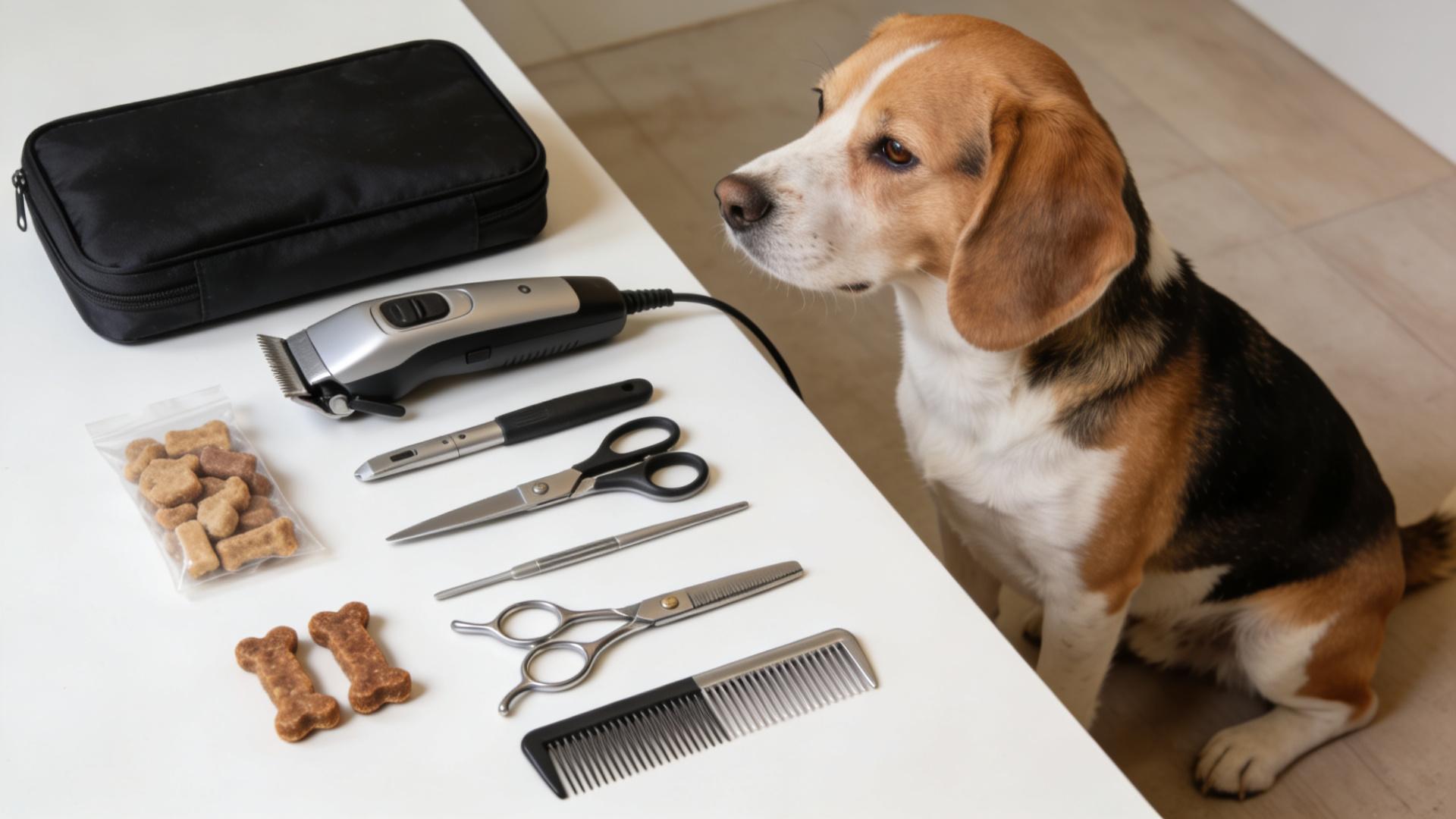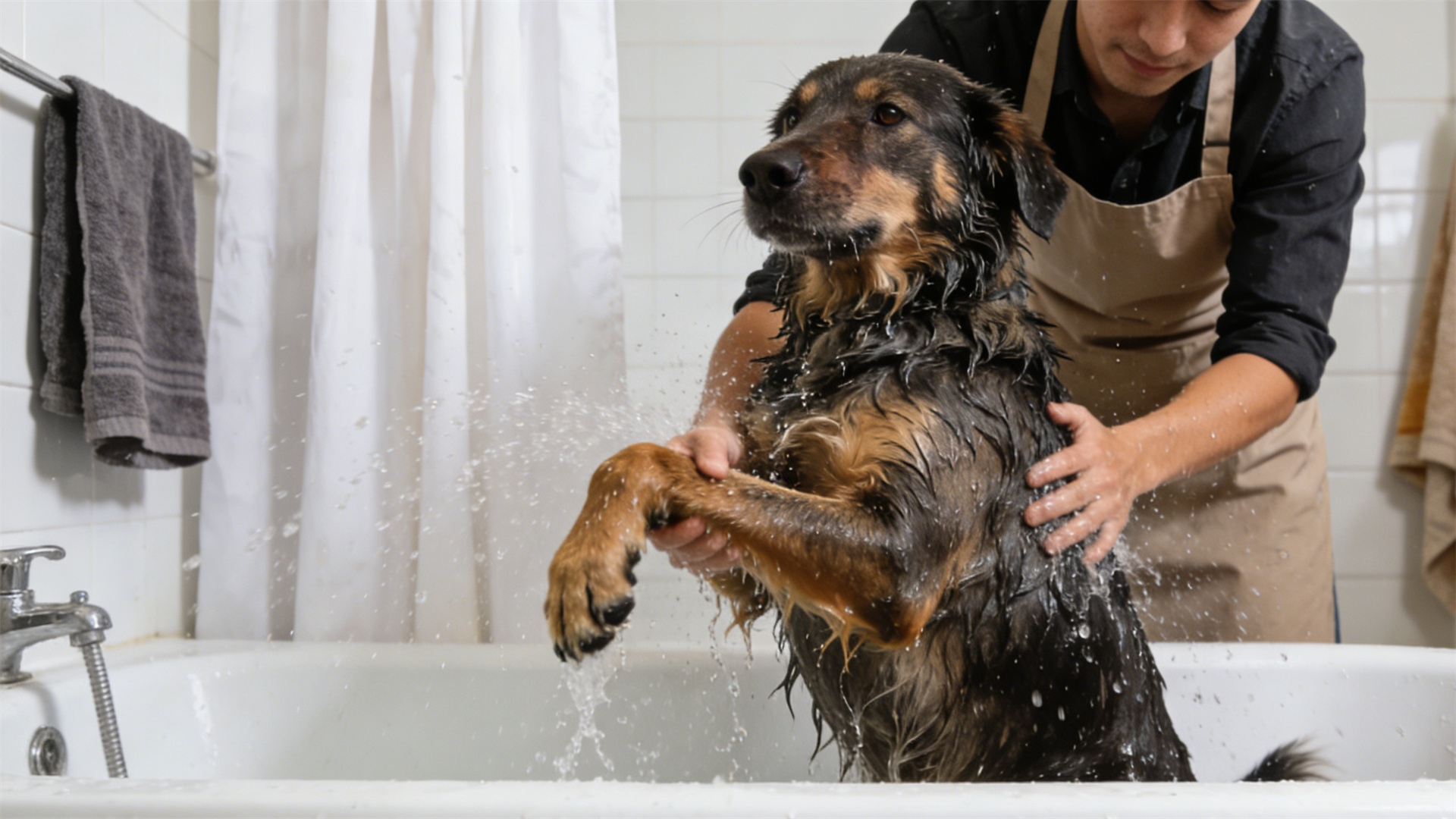
Choosing the right comb for your dog might seem like a minor detail, but it's a decision that lies at the very heart of effective grooming. Using the wrong tool can do more than just frustrate you and your pup; it can snag the coat, cause skin irritation, break healthy hairs, and turn a bonding experience into a stressful ordeal. Just as a painter needs the right brush, caring for your dog's coat requires the correct comb. This guide will demystify the three primary comb types—pin, wide, and detangling—and provide a clear roadmap for matching them to your dog's unique coat, ensuring every grooming session promotes coat health and comfort.
🛠️ Section One: The Pin Comb – The Detail Specialist
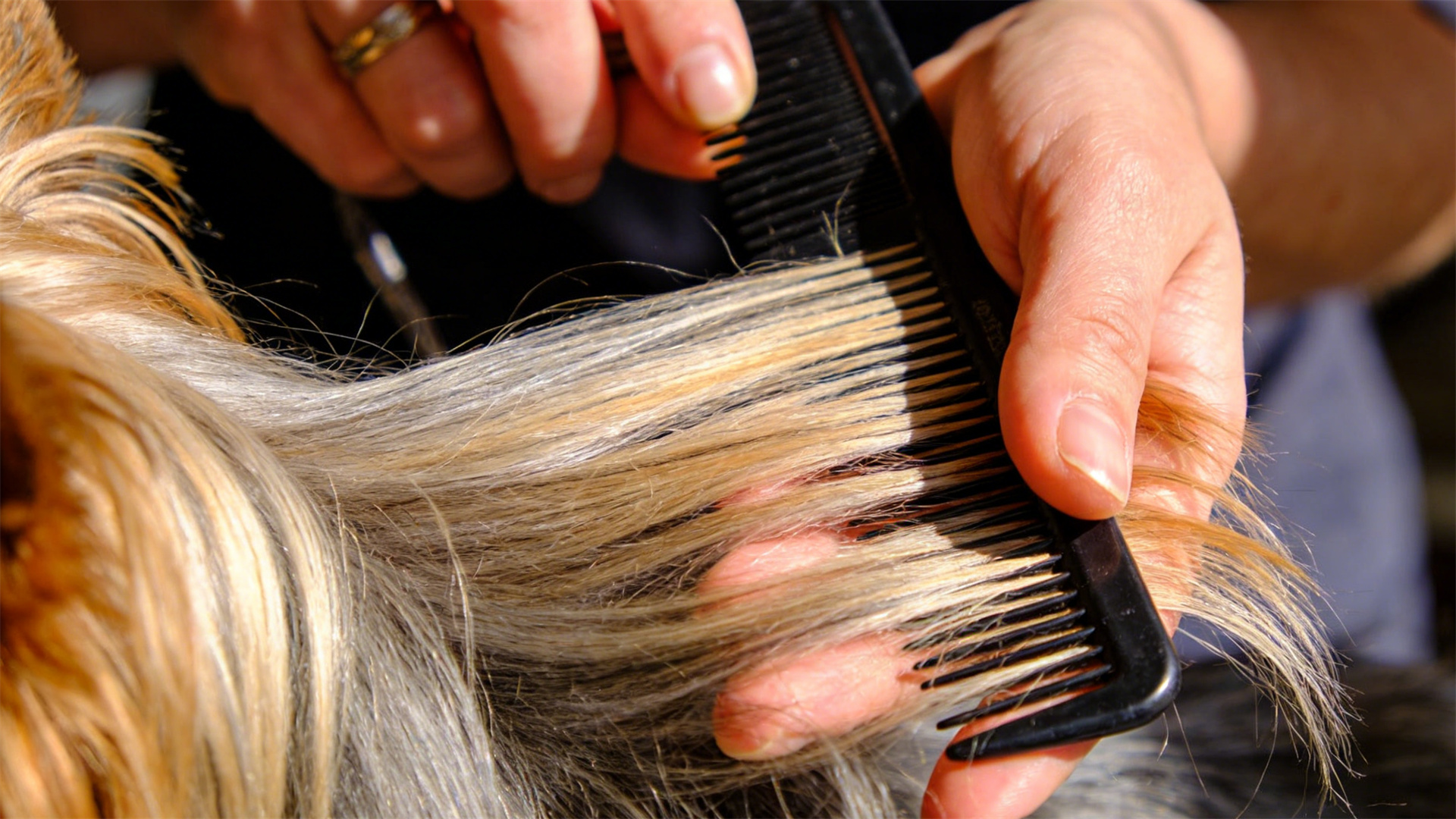
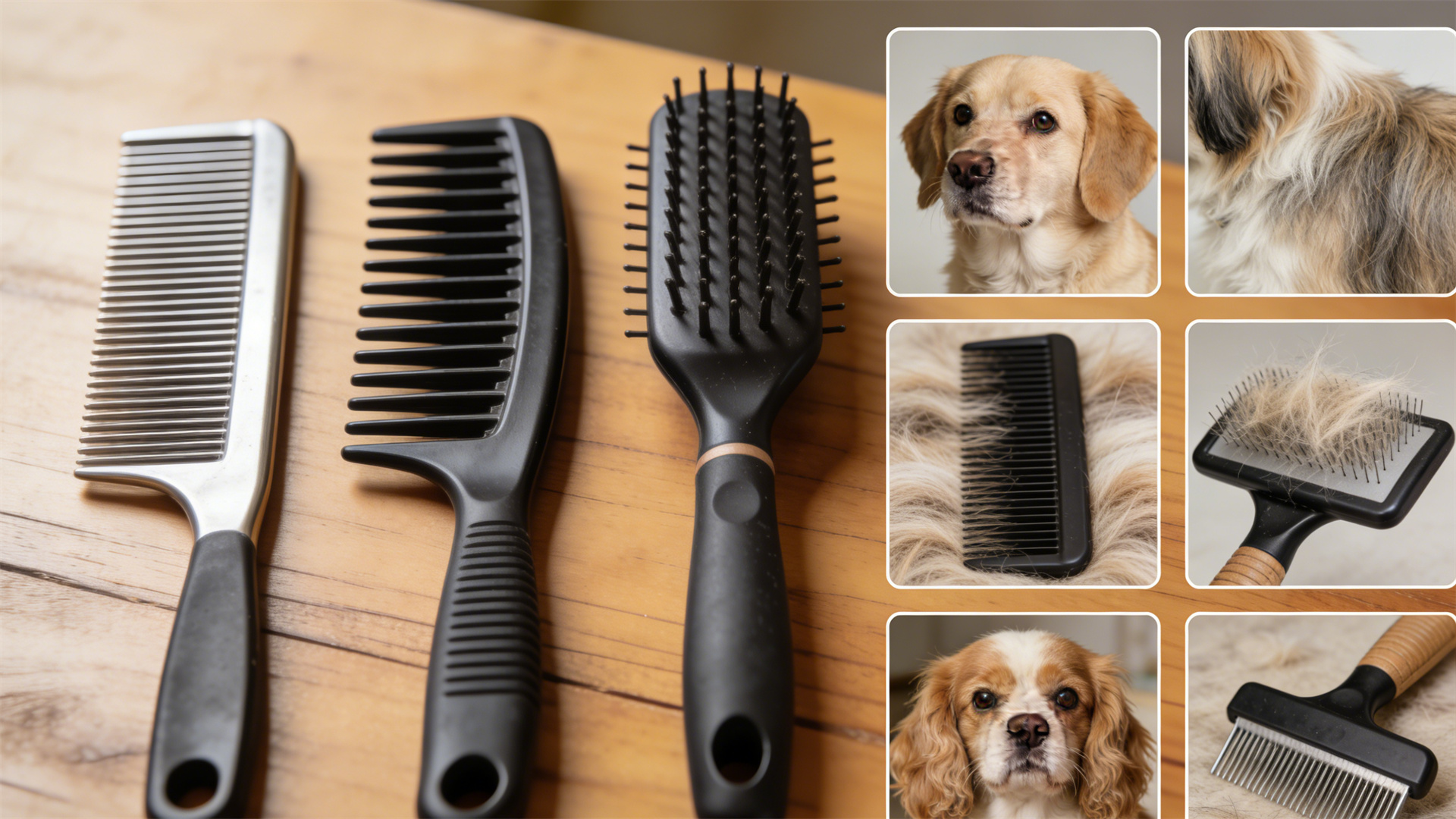
Imagine a tool designed for precision work. That's the pin comb. Characterized by its finely spaced, long, thin metal pins set closely together, this comb is built for detail-oriented grooming.
Design & Primary Uses
The closely spaced pins allow it to glide through the finest hairs, reaching down to the skin without scratching it. Its primary functions are:
- Finishing & Polishing: After using a wider comb, the pin comb is perfect for creating a smooth, sleek, and flawless finish on silky coats.
- Removing Fine Debris: It excels at removing tiny particles like dirt, dander, and loose undercoat that wider-spaced combs might miss.
- Working on Fine Coats: It is the go-to tool for breeds with delicate, human-like hair that tangles easily at the roots.
- Sectioning Hair: Groomers frequently use pin combs to create precise partings and sections for styling, especially in show grooming.
Ideal Breed Examples: This comb is a staple for Yorkshire Terriers, Maltese, Shih Tzus, Afghan Hounds, and Silky Terriers—breeds with long, fine, silky hair that requires meticulous care.
🔧 Section Two: The Wide Comb – The Versatile Workhorse
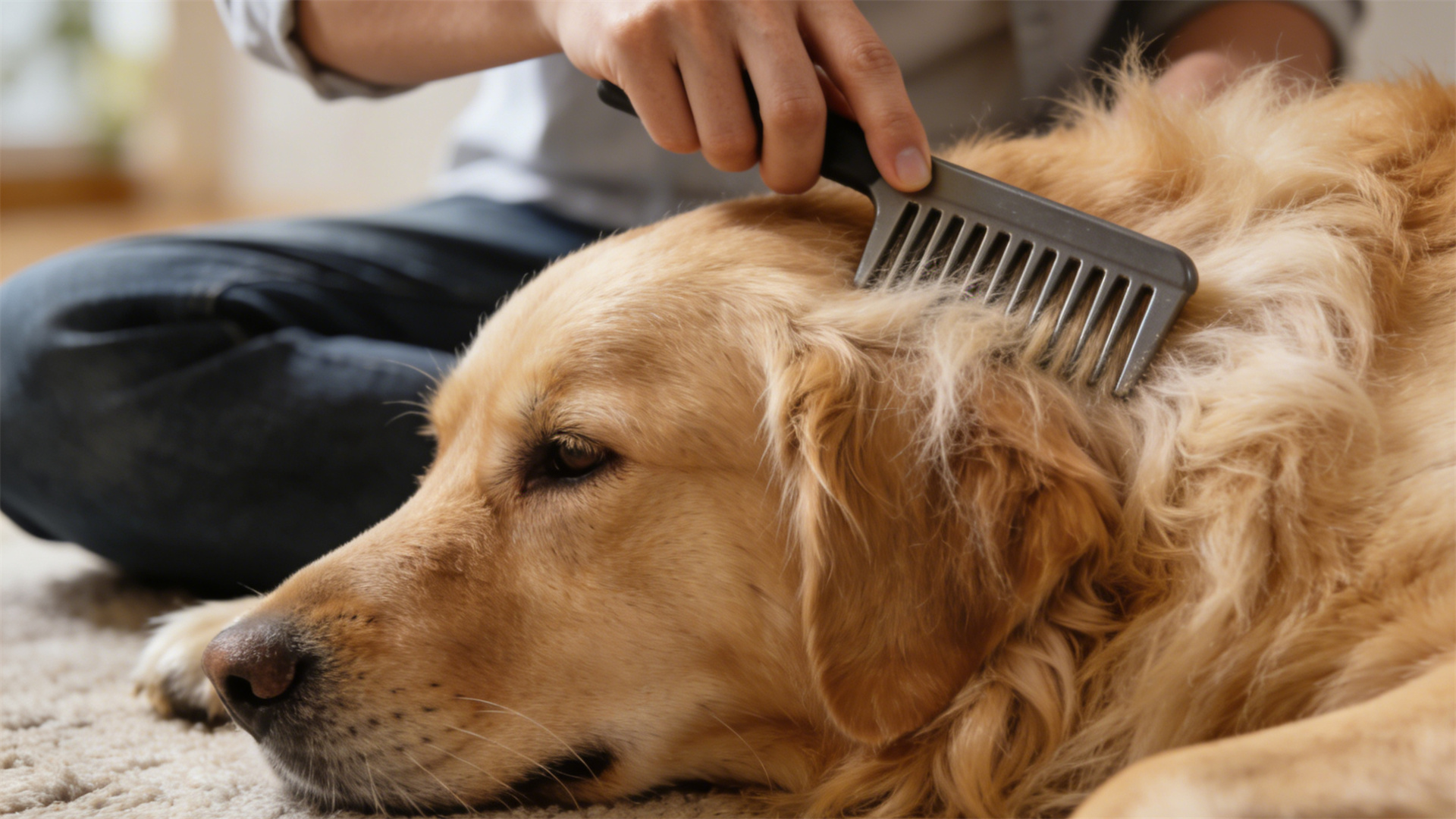
The wide comb, often called a medium or coarse comb, is the most versatile and commonly used grooming comb. It features teeth that are spaced further apart than those on a pin comb, typically made of metal or sturdy plastic.
Design & Primary Uses
Its design is all about efficiency and handling a variety of coat types for routine maintenance.
- General Detangling: It's the first line of defense for working through mild to moderate tangles in medium to long coats without causing excessive pulling.
- Everyday Grooming: Perfect for regular brushing sessions to remove loose hair, prevent mats, and distribute natural skin oils throughout the coat.
- Undercoat Raking (for wider versions): Wider-spaced combs, sometimes called "undercoat rakes," are specifically designed to reach through the topcoat and gently pull out the soft, dense undercoat of double-coated breeds.
- Pre-Bath Comb-Through: Essential for ensuring the coat is tangle-free before bathing, as water can tighten existing mats.
Ideal Breed Examples: An excellent all-rounder for Golden Retrievers, Labrador Retrievers, Collies, German Shepherds, and most breeds with a medium-length or long, flowing single coat.
⚙️ Section Three: The Detangling Comb – The Knot Specialist
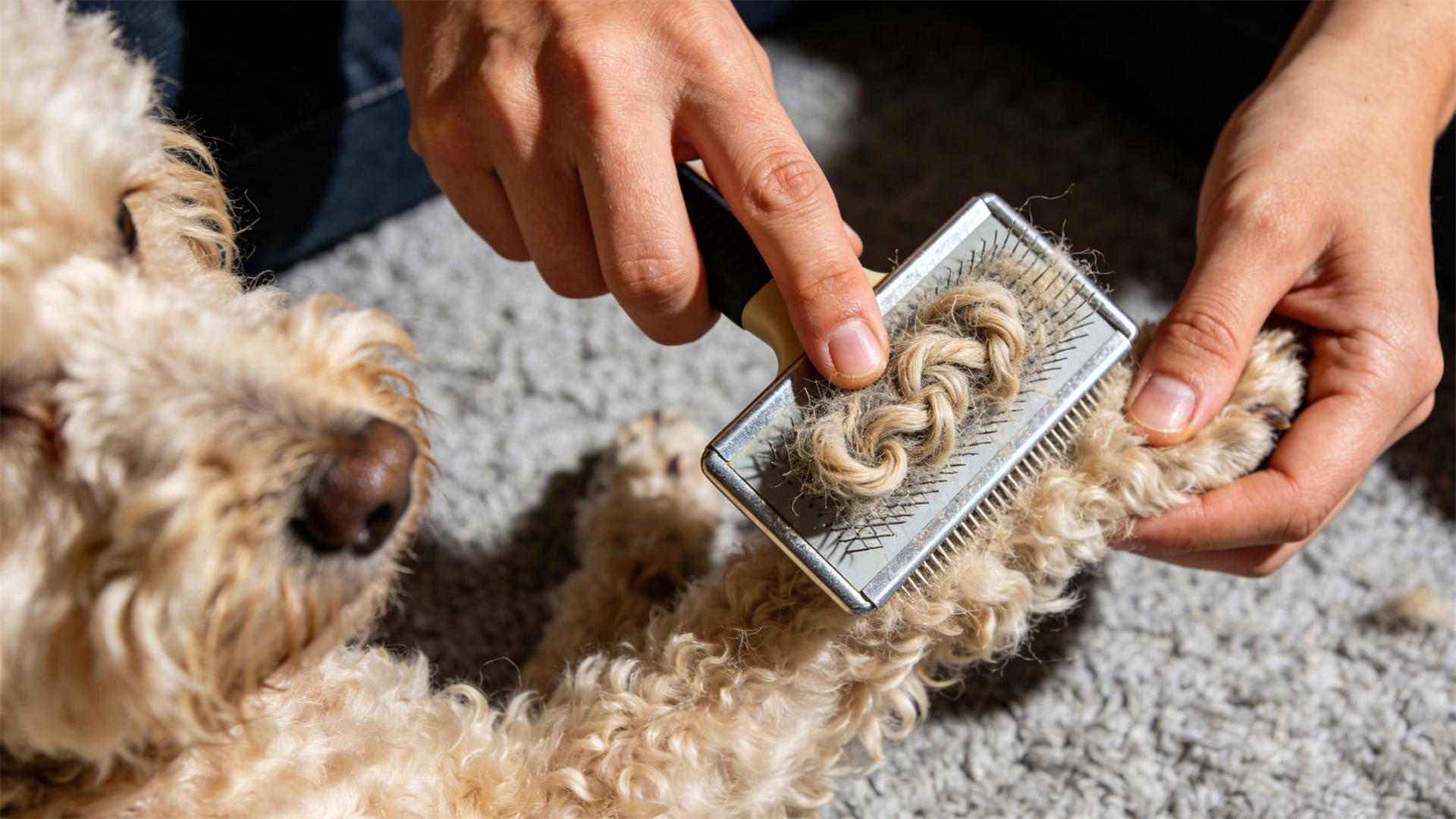
When you encounter a serious snarl or mat, reach for the specialized detangling comb. This comb is engineered to handle problem areas with minimal discomfort. Key features often include rotating teeth, coated or rounded tips, and sometimes a staggered tooth design.
Design & Primary Uses
Its unique mechanics are designed to de-escalate grooming battles.
- Working Through Severe Mats & Knots: The rotating teeth allow the comb to "give" when it hits a tough tangle, reducing pulling on the skin and hair. Coated tips glide more smoothly over the skin.
- Pain-Reduction: The primary goal is to make removing mats a less painful experience for the dog, encouraging cooperation.
- Preventing Breakage: By gently working through tangles instead of forcing them, it helps preserve the length and integrity of the coat.
Special Reminder: A detangling comb is a problem-solver, not an everyday tool. For severe pelting, consulting a professional groomer is always the safest option to avoid injury.
Ideal Breed Examples: A savior for high-maintenance curly and long coats prone to matting, such as Poodles, Bichon Frises, Maltese, any Doodle mix, and Cocker Spaniels.
🐕 Section Four: Understanding Dog Coat Types
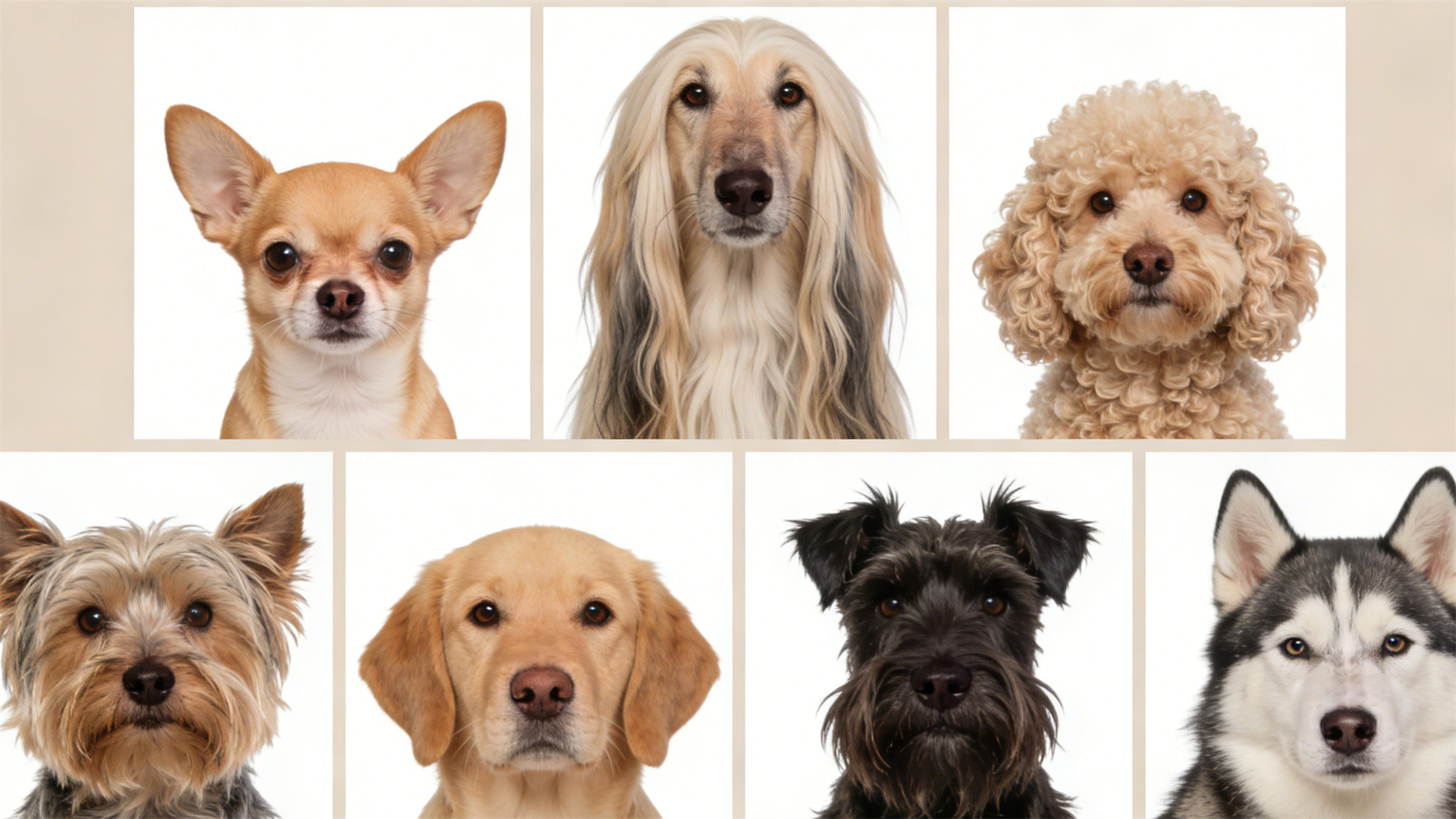
To choose the right comb, you must first understand the canvas you're working with. Dog coats are broadly classified into these key types:
- Short/ Smooth Coats: Lying close to the body (e.g., Beagle, Boxer, Dalmatian). They shed but are low-maintenance for tangles.
- Long/ Silky Coats: Hair grows continuously and is fine in texture (e.g., Yorkshire Terrier, Afghan Hound). Highly prone to tangles and mats.
- Curly/ Woolly Coats: Tight curls or a wool-like texture that mats very easily if not maintained (e.g., Poodle, Bichon Frise, Irish Water Spaniel).
- Wire/ Broken Coats: A harsh, wiry topcoat with a softer undercoat. Requires hand-stripping or clipping (e.g., Wire Fox Terrier, Scottish Terrier, Schnauzer).
- Double Coats: Features a dense, soft undercoat for insulation and a longer, coarser guard hair topcoat. They "blow" their undercoat seasonally (e.g., Siberian Husky, Chow Chow, Pomeranian, most Shepherds).
- Single Coats: Lacks a dense undercoat. Can be short or long (e.g., Poodle, Maltese, Yorkshire Terrier).
🎯 Section Five: Breed-Specific Comb Recommendations
Now, let's match the tool to the coat. This table provides a clear guide, but remember, many owners benefit from having a combination of tools (e.g., a wide comb for general work and a pin comb for finishing).
Coat Type & Recommended Comb
Long/Silky & Fine Single Coats (Yorkshire Terrier, Maltese, Shih Tzu):
Primary: Pin Comb for daily detailing and finishing.
Secondary: Detangling Comb for any knots that form, especially behind ears and in leg feathers.
Curly/Woolly Coats (Poodle, Bichon, Doodles):
Primary: A combination is key. Use a Wide Comb for general line-brushing technique through the curls.
Essential: Detangling Comb on standby for tough sections. Regular, frequent grooming is non-negotiable.
Double Coats - Medium/Long (Golden Retriever, Collie, Husky, Samoyed):
Primary: Wide Comb or an undercoat rake during shedding season to effectively remove the loose undercoat without harming the guard hairs.
For Finishing: A pin comb can be used on the furnishings (leg and tail hair).
Short/Smooth Coats (Labrador, Beagle, Dane):
Primary: A grooming mitt or rubber curry brush is often best. A wide comb can be used for a final pass to remove loose hair and check for skin issues.
Wire/Broken Coats (Schnauzer, Terriers):
Primary: A stripping knife or stone for coat maintenance. A wide comb is useful for keeping the beard and leg furnishings tangle-free.
✨ Section Six: How to Use Each Comb Effectively
Having the right tool is only half the battle; using it correctly is what ensures a positive experience.
General Tips for All Combing:
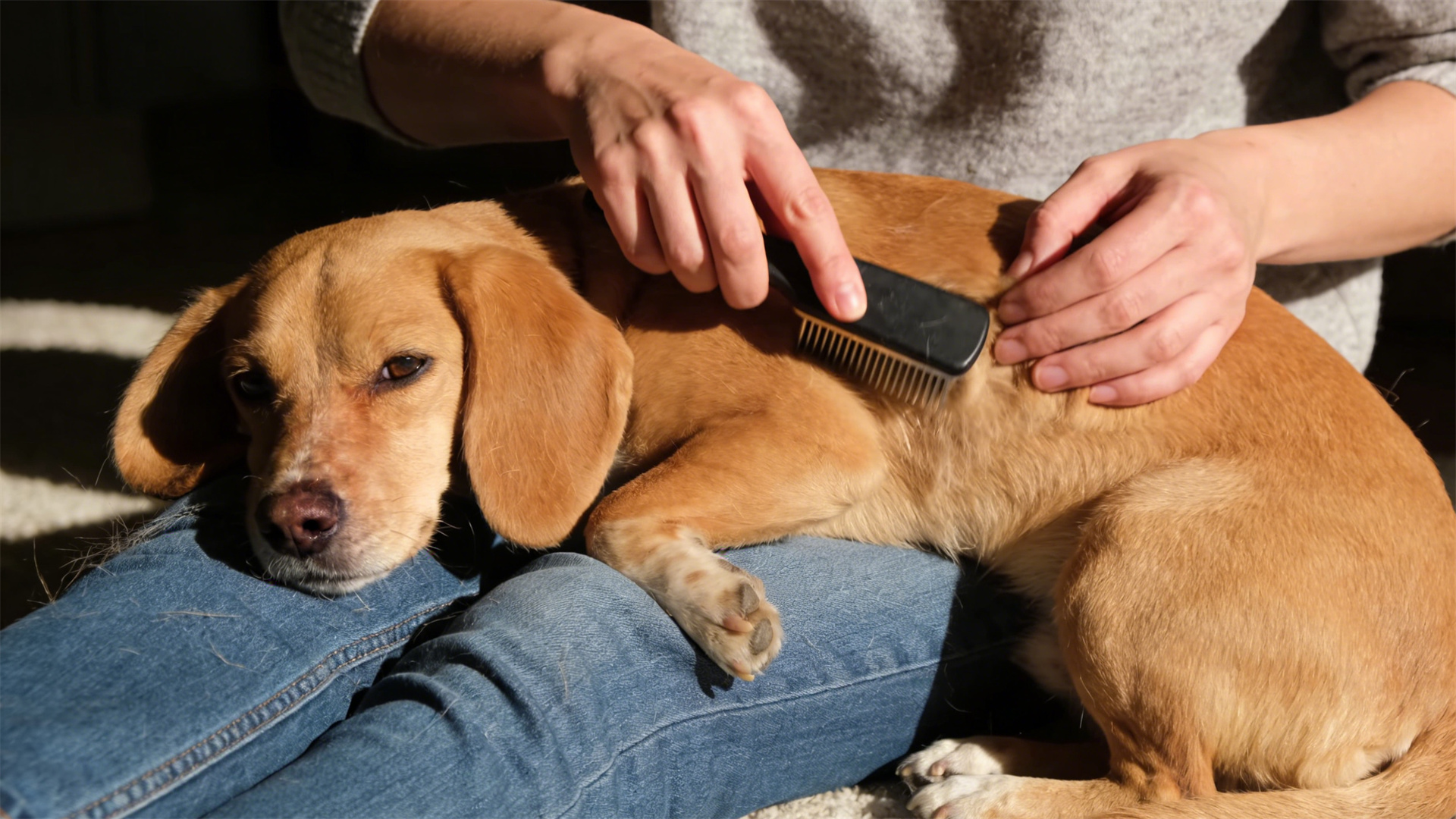
- Always Pre-Check: Run your fingers through the coat first to locate major tangles, sores, or foreign objects.
- Work in Sections: Especially for long or thick coats. Start at the tips of the hair and work upwards toward the skin as tangles loosen.
- Be Gentle & Patient: Never yank or force a comb. Hold the base of the hair near the skin to minimize pulling.
- Frequency: Long/curly coats may need daily combing. Double coats need frequent sessions during seasonal sheds. Short coats benefit from weekly sessions.
Comb-Specific Techniques:
Using a Pin Comb: Use gentle, smooth strokes for finishing. For fine coats, comb in the direction of hair growth to smooth the cuticle.
Using a Wide Comb: Use firm but gentle strokes to reach the undercoat. For double coats, "lift" the topcoat with one hand and use the comb to rake out the loose undercoat beneath.
Using a Detangling Comb:
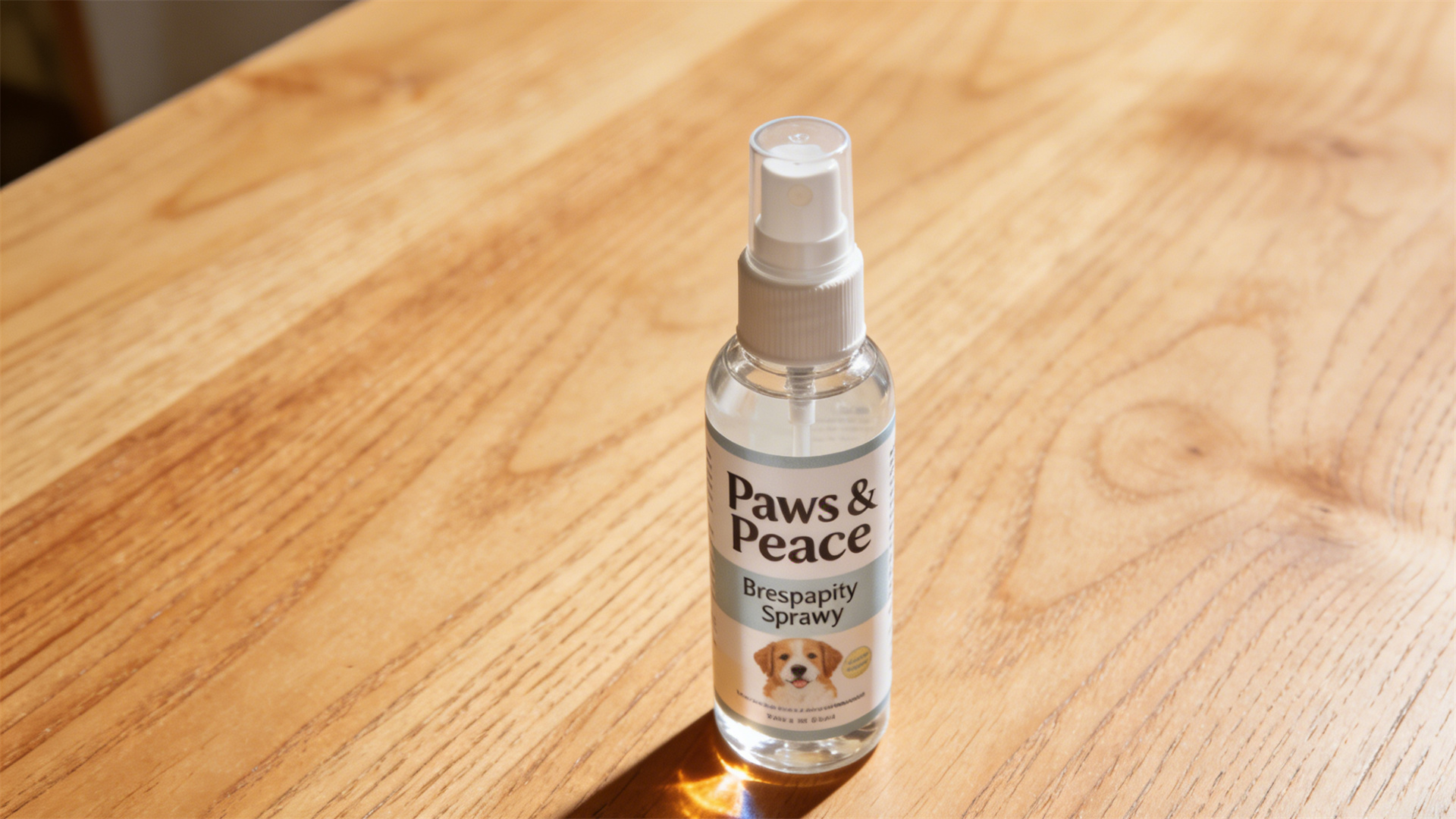
- Spray the mat with a dedicated dog coat detangling spray or conditioner.
- Gently try to separate the mat with your fingers.
- Starting at the very bottom edge of the mat, use the detangling comb in short, gentle picks.
- Work slowly inward. The rotating teeth should help the comb disengage rather than rip.
💡 Conclusion
Selecting between a pin comb, wide comb, and detangling comb is not about finding a single "best" tool, but about finding the best tool for your dog's specific coat at any given moment. By understanding your dog's coat type—whether it's the dense double layer of a Husky or the silky single coat of a Yorkie—you can invest in the right implements that will effectively remove tangles, promote skin health, distribute oils, and make grooming a bonding ritual rather than a battle. The right comb protects your investment in your dog's wellbeing and turns routine care into an act of love.