
You walk through the front door after a long day, and your heart sinks. The living room looks like a confetti bomb went off—shredded cushions, disemboweled pillows, and the leg of your favorite chair now a gnawed sculpture. Your canine companion greets you with a wagging tail and innocent eyes, oblivious to the carnage. Sound familiar? 🐾 This scene plays out in homes daily, leaving frustrated owners asking one burning question: “Why does my dog do this?” Is it a simple case of a hyperactive, high-energy dog, or is it a cry for help from a deeply bored mind? This article delves into the behavioral science behind the wreckage, separating myth from fact and providing a clear roadmap to peace and intact furniture.
🐕🦺 The Canine Mind: Understanding the Science Behind the Shredding
To address destructive dog behavior, we must first understand the why. Dogs are not machines that malfunction; they are complex beings driven by genetics, instinct, and neurochemistry. Canine psychology tells us that all behavior serves a purpose or fulfills a need. Destructive acts are often symptomatic of an unmet requirement in a dog's physical or mental world.
Credible research from institutions like the American Kennel Club and leading veterinary behaviorists points to two primary, often intertwined, drivers: instinctual energy expenditure and cognitive understimulation. Physiologically, a dog with unspent energy experiences elevated stress hormones like cortisol. Conversely, a mentally understimulated dog suffers from a lack of dopamine, the "feel-good" neurotransmitter earned through problem-solving and engagement. Both states create an internal pressure that must be released—and often, your sofa pays the price.
Instinctual Drives: The Blueprint for Behavior
Every dog carries the genetic blueprint of its ancestors. Herding, hunting, retrieving, and guarding are not just jobs; they are hardwired compulsions that demand an outlet. When these powerful instincts are ignored, they can manifest in destructive dog behavior that mimics their original purpose—digging, chewing, shredding, and patrolling.

⚡ The High-Energy Culprit: When the Body Demands More
This cause is often the first guess for owners of sporting, herding, or working breeds. A high energy dog destruction scenario is fundamentally about physics: energy input exceeds energy output. These dogs have a physiological engine built for endurance and activity.
- Breed-Specific Tendencies: Think Border Collies, Australian Shepherds, Siberian Huskies, Jack Russell Terriers, and Labrador Retrievers. Their genetics prepare them for days of intense work.
- Tell-Tale Signs: Pacing, whining, inability to settle, destructive chewing focused on door frames or windowsills (escape attempts), and frenetic, often repetitive play.
- Common Destruction: This tends to be large-scale, athletic, and intense. Digging craters in the yard, chewing through drywall, shredding items with vigorous shaking, and zoomies that knock over lamps.
In essence, your home becomes a gym and a casualty of their unmet athletic needs. A Special Reminder: A tired dog is not always a good dog—but a physically exhausted dog is at least a calmer one.

😴 The Boredom Bomb: When the Mind Goes Unfed
While energy is physical, boredom is a psychological state. Dog boredom destruction stems from a lack of mental enrichment. It’s the canine equivalent of scrolling mindlessly on your phone for hours—unsatisfying but the only option available. This can affect any breed, including lower-energy ones.
- Telltale Signs: Excessive sleeping (but not restful), sighing, staring blankly, and sporadic, seemingly lazy destruction like methodical chewing on a single couch cushion or licking a floorboard until it wears away.
- How It Differs: The destruction from boredom is often more focused, repetitive, and ritualistic. It may happen right after you leave or during predictable, quiet times of the day. The dog isn't "blowing off steam" but creating its own stimulation.
This is where the question "is my dog bored or anxious?" becomes crucial. While boredom is a lack of positive engagement, anxiety is a state of negative apprehension. However, chronic boredom can absolutely escalate into anxiety-based behaviors.
The Anxiety Overlap
Dog anxiety destruction, often linked to separation distress, is a more severe cousin of boredom. It’s typically accompanied by other distress signals like vocalization, pacing, panting, and accidents. The destruction is usually centered on exit points (doors, windows) or items that smell strongly of the owner.

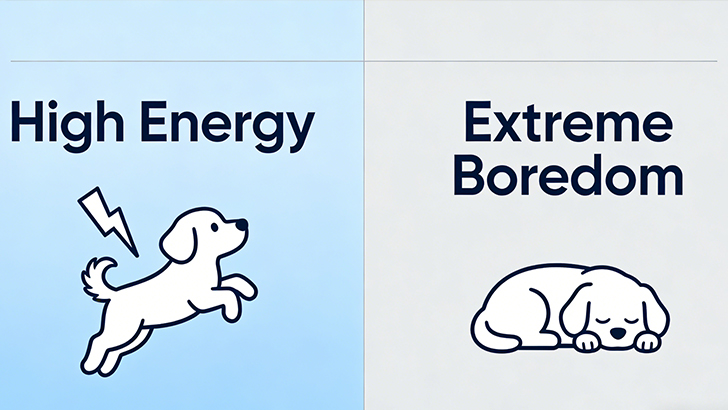
🔍 High Energy vs. Extreme Boredom: The Comparative Diagnosis
So, which force is at work in your home? Use this direct comparison to play detective:
Primary Driver: High Physical Energy
• Timing of Destruction: Can occur anytime, but often during periods when the dog would typically be active (mornings/evenings).
• Nature of Acts: High-impact, "zoomie"-style, involves full-body movement.
• Dog's Overall Demeanor: Constantly "on," struggles to relax even in calm environments.
• Breeds Most Susceptible: Working, sporting, herding breeds.
Primary Driver: Extreme Mental Boredom
• Timing of Destruction: Often during predictable quiet times (when you're focused on work/TV) or shortly after you leave.
• Nature of Acts: Methodical, sustained chewing or licking on one item; may seem almost habitual.
• Dog's Overall Demeanor: Lethargic or "lazy" interspersed with brief destructive episodes.
• Breeds Most Susceptible: All breeds, but particularly intelligent ones like Poodles, Shepherds, and any dog left alone with nothing to do.
Many dogs, unfortunately, suffer from a combination of both, creating the perfect storm for why dogs destroy things.
✅ The Solutions Toolkit: Addressing Both Body and Mind
Once you've identified the likely cause, implement these targeted, actionable strategies. For best results, combine elements from both.
For the High-Energy Dog: Channel the Torrent
1. Adequate, Smart Exercise: Move beyond the walk. Incorporate interval training: short bursts of sprinting (fetch, flirt pole) followed by brief rest. Aim for 30-60 minutes of heart-pumping activity daily.
2. Breed-Specific Jobs: Give their instinct an outlet. Herding balls for collies, scent trails for hounds, weighted backpacks for huskies on walks.
3. Dog Sports: Agility, flyball, dock diving, and advanced obedience provide structured energy outlets.
For the Bored Dog: Engage the Brain
1. Mental Stimulation for Dogs is Key: A 15-minute training session can be more tiring than an hour-long walk. Teach new tricks daily.
2. Canine Enrichment Ideas: Puzzle toys, snuffle mats, and frozen Kongs (with peanut butter or yogurt) turn mealtime into a rewarding challenge.
3. Novel Experiences: Change walking routes regularly, introduce new smells in the yard, have "playdates" with predictable dog friends.
Universal Strategies for All
• Management & Dog Proofing Your Home: Use baby gates, crate training for destructive dogs (as a safe haven, not a prison), and put valuables away. This prevents rehearsal of the bad behavior.
• Training for "Stop Dog Destructive Chewing": Teach a solid "leave it" and "drop it." Offer a constant supply of legal chew items (bully sticks, yak chews) that are more appealing than your furniture.
• Routine: Dogs thrive on predictability. Consistent feeding, walk, play, and quiet times reduce anxiety and provide security.

💡 Conclusion: A Tired Body and a Satisfied Mind
The science is clear: destructive dog behavior is rarely an act of spite, but a signal—a bill for unpaid physical or mental dues. The dichotomy of high energy dog destruction versus dog boredom destruction provides the framework for diagnosis. By assessing whether your dog's engine is overflowing or their mind is underfed, you can apply precise solutions. The ultimate goal is a dog whose physical energy is respectfully channeled and whose cognitive needs are met with creative enrichment. Address both, and you transform from a victim of chaos to an architect of harmony.