Exhausted from puppy night waking? Our expert guide reveals the root causes of barking and restlessness and provides a proven, step-by-step training plan to finally get peaceful sleep for you and your new dog.

😫 Introduction: You’re Not Alone in the Sleepless Nights
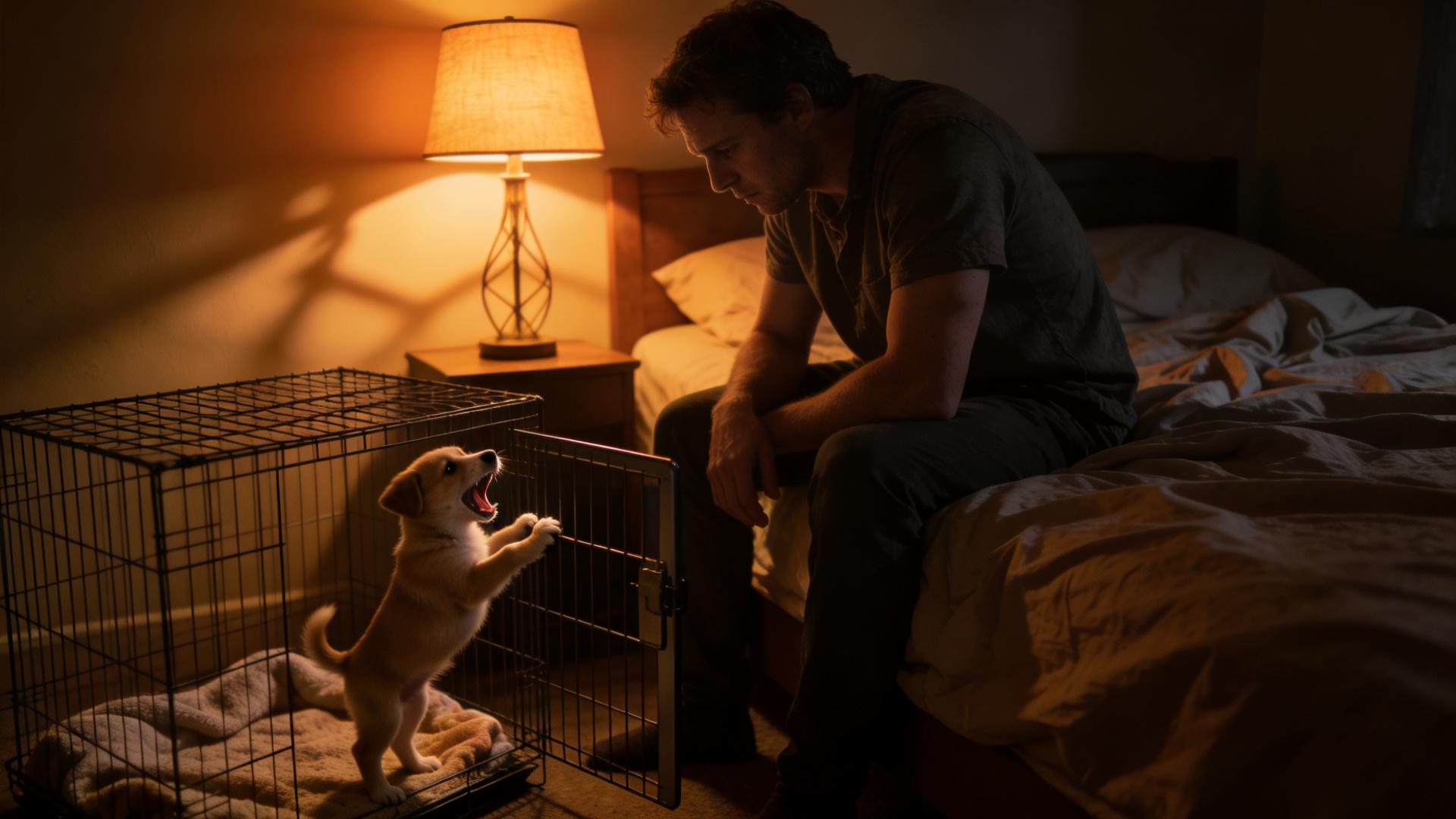
That 3 AM symphony of whines, barks, and crate-rattling is a brutal rite of passage for new puppy parents. The exhaustion is real, and the frustration can make you question every life choice that led to this fuzzy, adorable alarm clock. Take a deep breath. We’ve been there. Puppy nighttime disturbances are not a personal failing; they are a common, solvable training challenge. This isn't about finding a magic trick, but about building understanding and implementing consistent, compassionate habit training. This guide is your practical blueprint to transform those chaotic, restless nights into a peaceful routine, strengthening your bond and ensuring everyone—including your pup—wakes up happier.
🔍 Section One: Why Is My Puppy Barking and Restless at Night?
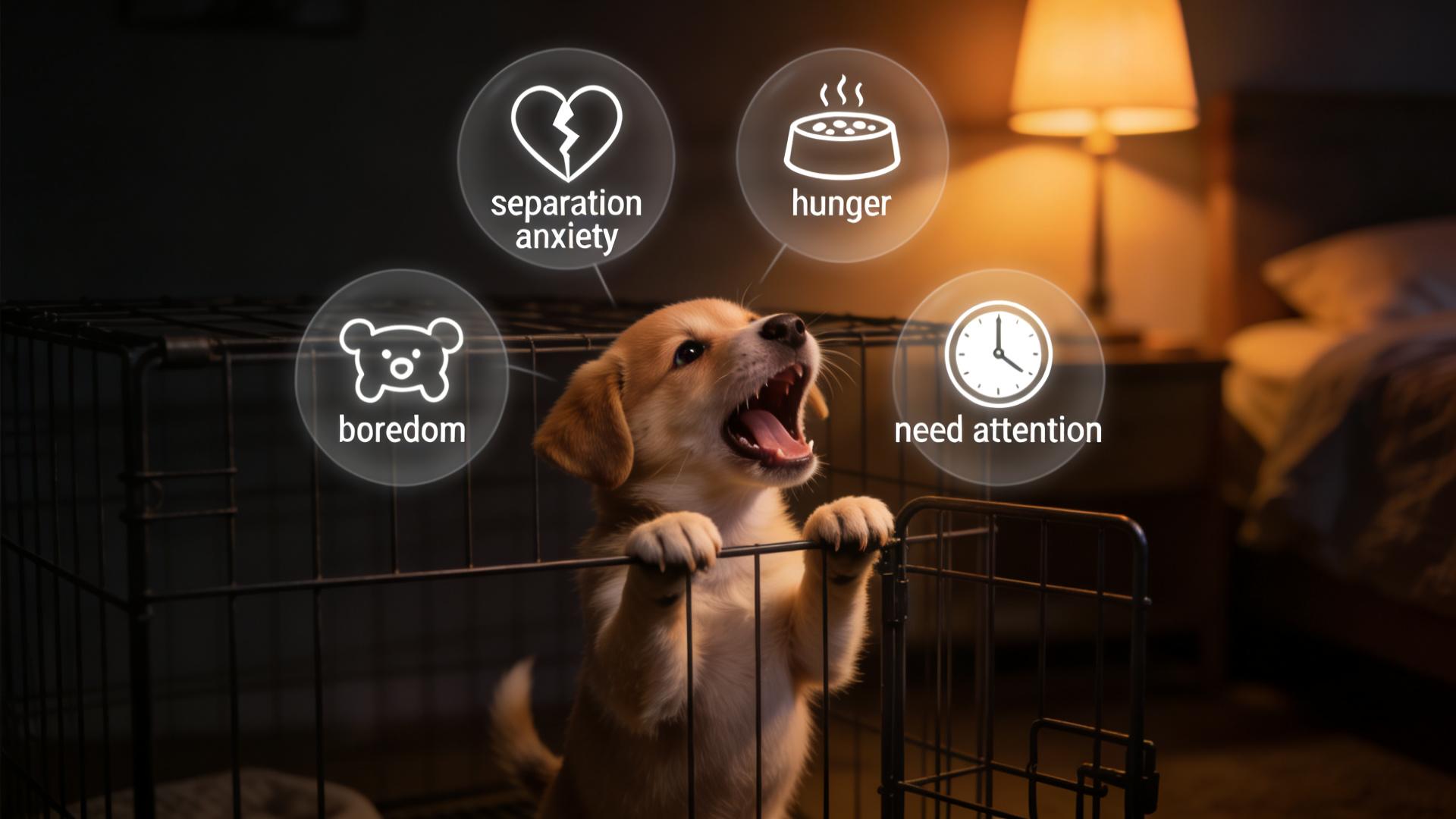
To effectively solve the problem, you must first play detective. Barking and restlessness are symptoms, not the core issue. Here are the primary root causes:
1. Separation Anxiety & The Fear of Being Alone
For a puppy, being alone in the dark is a primal fear. They are pack animals. Suddenly being separated from their littermates and placed in a new environment triggers instinctual panic. Nighttime barking is often a distress call—“Don’t leave me!”
2. Basic Physical Needs: “I Gotta Go!”
A young puppy’s bladder is tiny. The general rule is they can hold it for their age in months plus one hour (a 3-month-old = ~4 hours). Barking or whining at night is frequently a polite (or not-so-polite) bathroom alert. Hunger or thirst can also play a role.
3. Lack of Daytime “Debt” Payment
A tired puppy is a sleepy puppy. If your pup hasn’t had sufficient physical exercise and, more importantly, mental enrichment during the day, they will have a surplus of energy to burn when the house is quiet. This manifests as restlessness, chewing, and vocalization.
4. Environmental Triggers & Confusion
The world is quieter at night, making unfamiliar sounds—a distant siren, the fridge humming, floorboards creaking—more pronounced. Furthermore, puppies don’t inherently know our human day/night schedule. Without clear cues, they may simply be confused about when it’s time to settle.
5. Discomfort or Medical Issues
Special Reminder: Teething pain, an upset stomach, parasites, or a urinary tract infection can cause significant discomfort. Rule out medical causes first with a veterinary checkup, especially if the behavior is sudden or accompanied by other symptoms like accidents, lethargy, or loss of appetite.
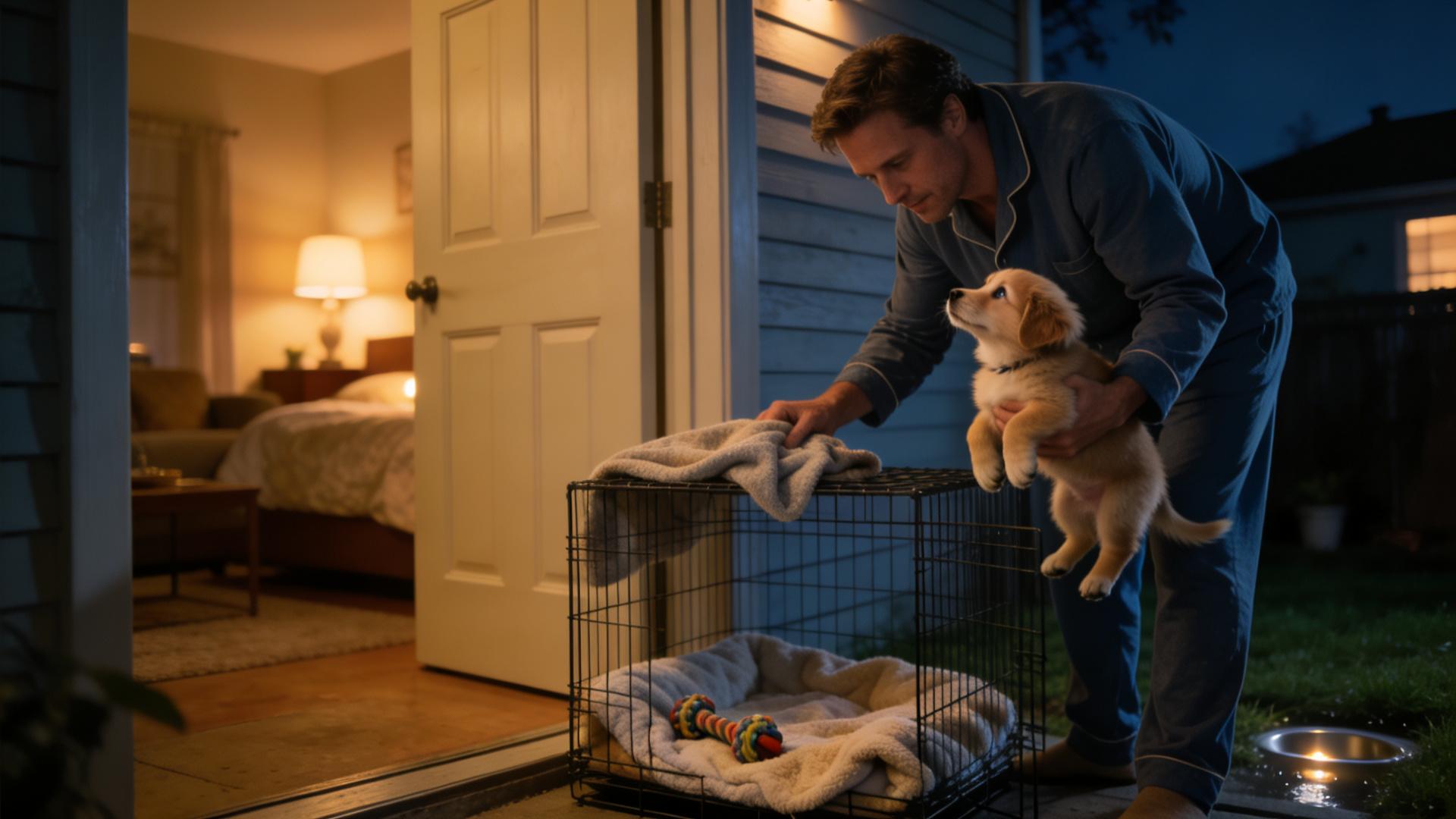
🌙 Section Two: The Foundation – The Pre-Bedtime Routine & Environment
Success is built before you turn out the light. A predictable, calm routine signals to your puppy’s brain that sleep is coming.
🐾 The Calming Wind-Down Ritual (1-2 Hours Before Bed)
- Last Big Play & Training Session: About an hour before bed, engage in active play and short training sessions to expend mental energy.
- The Final Potty Break: This is non-negotiable. Take your puppy out for a last-chance bathroom opportunity right before they go into their sleep space. Keep it boring and business-like.
- Quiet Time: Dim the lights, turn off stimulating TV, and encourage calm chewing on a favorite toy or a long-lasting chew.
- Last Call for Water: Remove the water bowl about 1-2 hours before bed to reduce the likelihood of a full bladder waking them. (Ensure they have ample water throughout the day).
🛏️ Crafting the Perfect Sleep Sanctuary
- The Crate as a Cozy Den: The crate should be just big enough for your puppy to stand, turn around, and lie down. Too much space encourages them to eliminate in one corner. Make it inviting with a soft, washable bed and a worn t-shirt that smells like you.
- Dark, Quiet & Comfortable: Use a crate cover to create a dark, den-like environment that muffles sounds and drafts. Ensure the room temperature is comfortable—not too hot or cold.
- Consistent Location is Key: For the first few weeks, keep the crate in your bedroom or just outside your door. Your presence is a powerful anti-anxiety remedy. You can gradually move it to your desired permanent location later.
🗣️ Section Three: Training Solutions for Nighttime Barking
When the barking starts, your reaction is the training. Here’s how to respond based on the likely cause.
🚫 For Attention-Seeking/Demand Barking: The “Ignore & Reward” Method
- Do Not Engage: No eye contact, no talking, no touching the crate. Any attention—even saying “no!”—is a reward.
- Wait for Quiet: The millisecond there is a pause in the barking/whining, mark it with a calm “Yes” or a clicker.
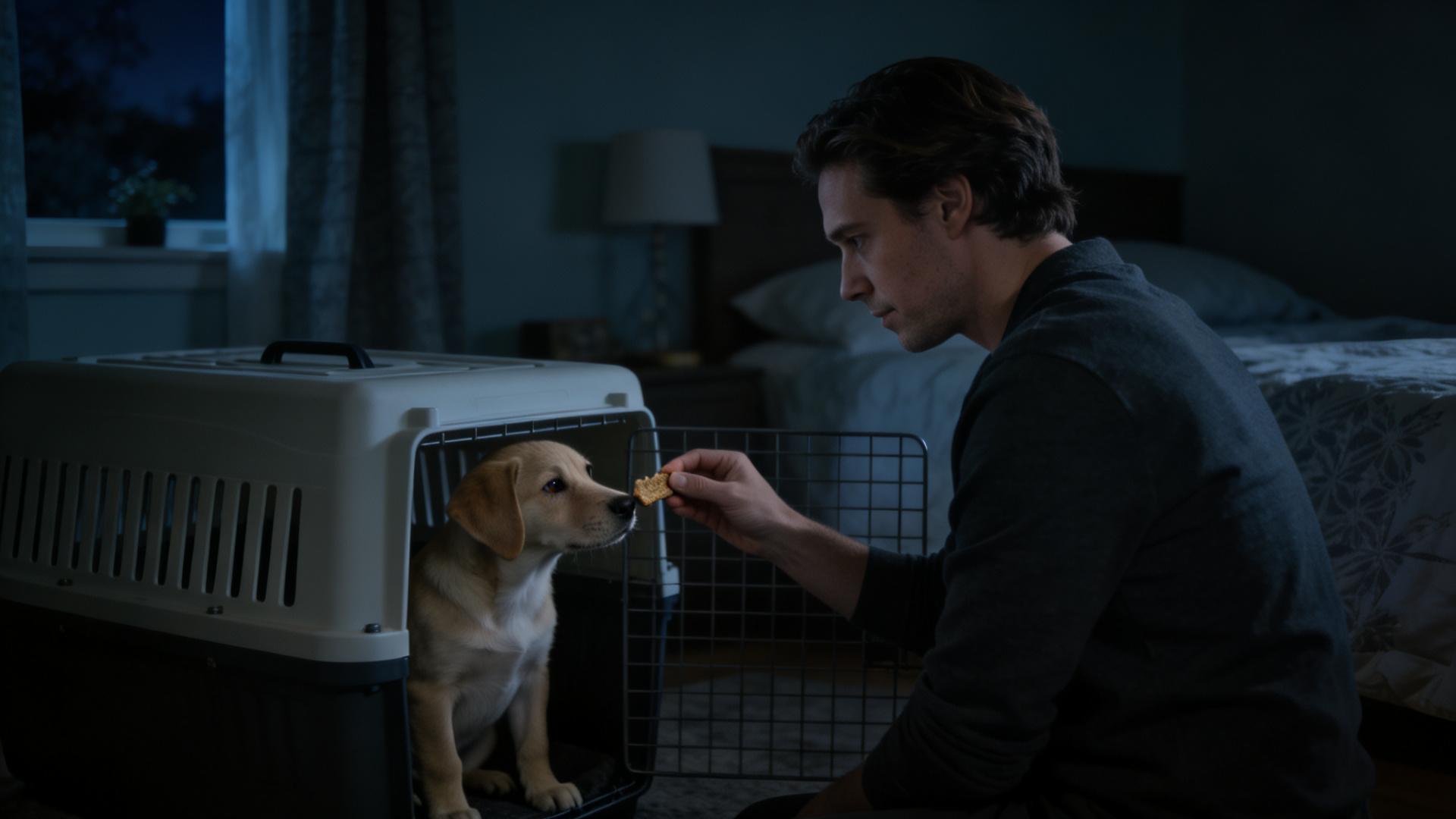
- Reward Quiet: Quietly drop a high-value treat into the crate. You are teaching: “Quiet behavior makes good things happen.”
Critical Rule: Never give in and let them out of the crate while they are barking. This teaches them that barking is the key to freedom, making the behavior worse.
🚽 For the Potty Alert: The Boring Bathroom Break
If you suspect a real need (it’s been a few hours, they’re young), respond immediately but without fanfare.
- Leash them calmly, no talking.
- Take them directly to their potty spot. Stand still, be boring.
- If they eliminate, offer quiet, calm praise and return straight to the crate.
- If they don’t go within 3-5 minutes, assume it was not a potty call and return them to the crate (likely seeking attention).
❤️ For Anxiety: Proximity & Comfort
For a genuinely fearful pup, sometimes they just need to know you’re there.
- Heartbeat Toy: A snuggle puppy toy with a simulated heartbeat and warmth can mimic littermates.
- White Noise: A fan or white noise machine can mask startling environmental sounds.
- Close the Gap: If the crate is by your bed, let your fingers dangle near the crate so they can smell you. Often, this is enough.
😴 Section Four: Curbing Restlessness and Teaching “Settle”
The goal is a puppy who knows how to relax. This is a skill you must teach.
🏃 Pay the Energy Debt During the Day
Ensure your puppy gets age-appropriate exercise (avoid over-exercising large breeds) and, crucially, mental stimulation: training sessions, food puzzles, sniffari walks, and frozen Kongs. A mentally tired puppy is a peaceful puppy.
🧠 Teach a “Settle” or “Place” Command
During calm daytime moments, reward your puppy for lying quietly on their bed or mat. Use high-value treats delivered calmly between their paws. Build duration slowly. This transfers directly to nighttime behavior.
🍖 The Bedtime Food-Dispensing Toy
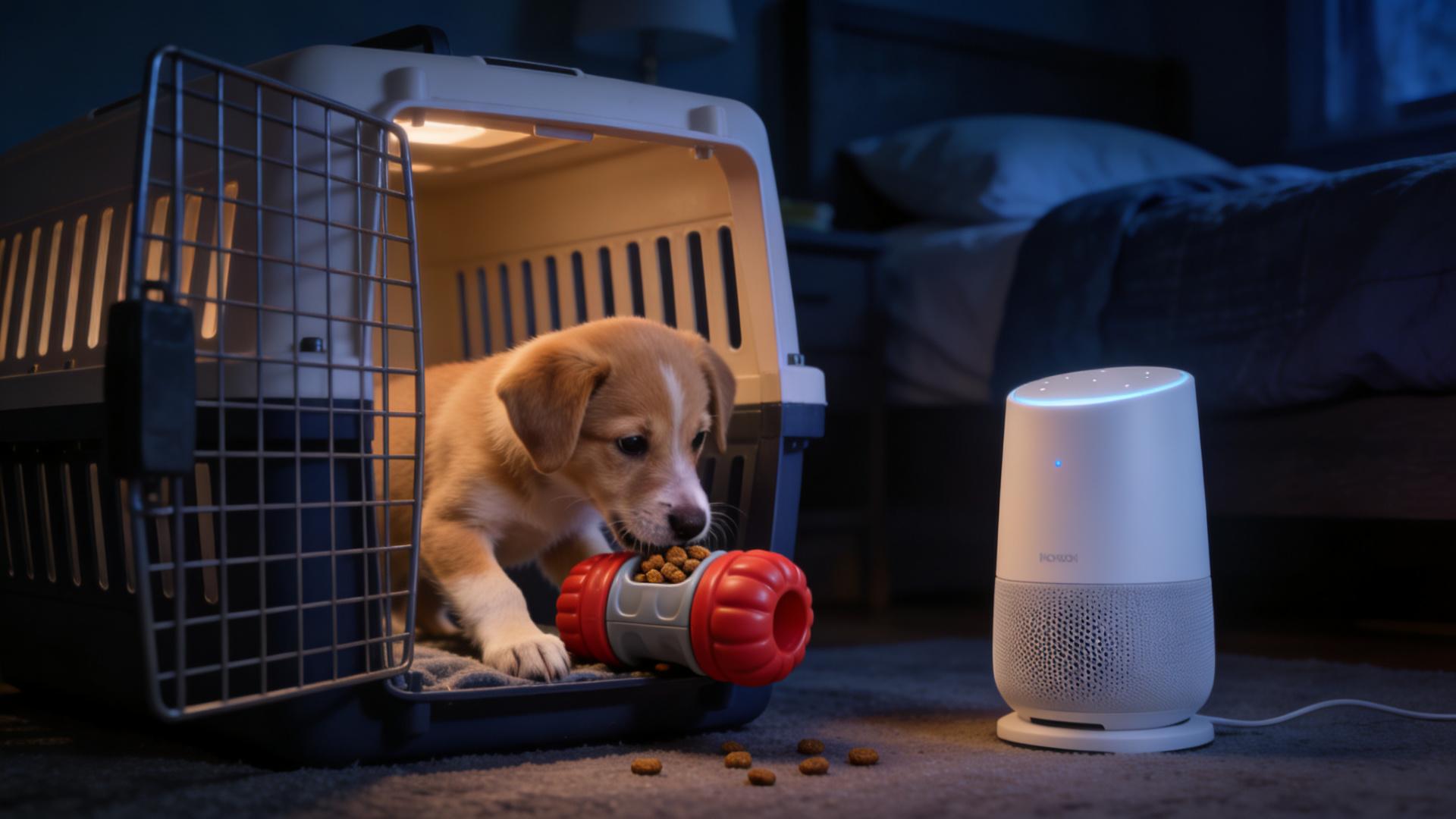
A Kong or Toppl stuffed with their dinner or a mix of kibble, wet food, and banana (then frozen) is a game-changer. The act of licking is naturally calming and provides a positive, distracting activity as they fall asleep.

❓ Section Five: Troubleshooting and FAQ
Q: What if the barking is non-stop and ignoring it isn’t working?
A: First, ensure all physical needs are met. If so, you may need a more gradual approach. Try sleeping closer to the crate for a few nights, then gradually increase the distance. For severe anxiety, consult a certified professional dog trainer or veterinary behaviorist.
Q: How do I handle the 5 AM wake-up call?
A: This is often a habit. Do not start the day while they are barking. Set an alarm for before they usually wake (e.g., 4:45 AM), wake them calmly, take them out for a boring potty break, and return them to the crate until your desired wake-up time. You reset the clock by being the one to initiate.
Q: Medical vs. Behavioral – How can I tell?
A: Red flags for a medical issue include: sudden onset, straining to urinate, accidents during the day, excessive thirst, changes in appetite, or crying as if in pain. When in doubt, see your vet.
Q: How long will this training take?
A: Most puppies show significant improvement within 3-7 nights of absolute consistency. However, the journey to sleeping fully through the night (8+ hours) depends on bladder maturity, typically between 4-6 months of age. Patience is non-negotiable.
💤 Conclusion: Consistency is Your Superpower
Transforming your puppy’s sleep habits is a test of patience, but the reward is immense: restful nights for years to come and a dog who feels secure, confident, and well-adjusted. Every time you respond with calm consistency, you’re not just stopping a bark—you’re teaching communication, building trust, and establishing lifelong good habits. The sleepless nights are temporary. The bond and peaceful home you’re creating are permanent. Stick with the plan, support your pup, and look forward to the morning when you both wake up refreshed, ready for a new day of adventures together.